
4 Blado Dishes That Show How Rich Indonesian Flavor Can Be

What does Indonesian food actually taste like?
If your first answer is simply spicy, there is a lot more to discover.
Indonesian food can be aromatic.
It can be rich.
It can be smoky.
It can be grilled.
It can be fresh.
It can be built around coconut, herbs, spice mixtures, sambal, and different textures.
At Blado Restaurant in Ubud, several dishes show these different sides of Indonesian flavor.
Four good examples are:
Beef Rendang.
Sate Lilit.
Pork Rib.
Ayam Panggang.
They use different proteins and different preparations.
Some are slow-cooked.
Some are grilled.
Some come with sambal.
One is built around coconut milk and aromatic spices.
Together, they show why rich Indonesian flavor is much broader than simply making a dish hot.
1. Beef Rendang: Rich, Slow-Cooked, and Aromatic

Let's start with Beef Rendang.
If you enjoy dishes with a rich and developed flavor, this is one of the clearest examples on the Blado menu.
The beef is slow-cooked with:
-
Coconut milk
-
Lemongrass
-
Galangal
-
Spices
It is served with steamed rice.
The cooking process is important here.
This is not a dish where the ingredients are quickly combined and served.
The beef is slowly cooked with coconut milk and aromatic ingredients.
That gives the dish a different character from grilled or fried food.
The Role of Coconut
Coconut milk is an important part of the dish.
It contributes richness and helps create the base of the sauce around the beef.
Then lemongrass and galangal bring their own aromatic character.
Spices complete the combination.
The result is not simply "spicy beef."
It is a layered dish where richness, aroma, and seasoning work together.
That is one of the reasons Beef Rendang is such a useful example when talking about local food Bali.
The Texture Matters Too
The slow cooking also affects the way the beef is experienced.
Instead of focusing on a grilled crust or crispy exterior, the dish centers around slow-cooked beef and its rich accompanying flavors.
That creates another type of Indonesian food experience.
If you enjoy:
Richness + aromatic spices + slow cooking
Beef Rendang is a natural dish to explore.
2. Sate Lilit: Grilled Chicken with a Local Spice Direction
Now move from slow cooking to grilling.
Sate Lilit uses minced chicken combined with a homemade spice mix and then grilled.
It is served with:
-
Steamed rice
-
Two types of sambal
-
Fresh urab
-
Onion crackers
The preparation alone makes it different from Beef Rendang.
The chicken is minced first.
Then it is combined with the homemade spice mix.
Then it is grilled.
That means the seasoning becomes part of the protein rather than simply being added at the end.
Grilling Adds Another Layer
The grill changes the character of the chicken.
You get the aromatic spice mixture together with the grilled preparation.
This creates a different flavor direction from a slow-cooked dish.
And this is where Indonesian food becomes interesting.
The same basic ingredient—chicken—can create a completely different experience depending on how it is prepared.
Sate Lilit is not about making the chicken extremely spicy.
It is about the combination of:
Minced chicken + homemade spice mix + grilling + sambal.
The Sambal Makes the Plate More Flexible
Sate Lilit is also served with two types of sambal.
That gives you control over how much additional heat or flavor you want in each bite.
You can eat the grilled chicken with rice.
Add sambal.
Try the fresh urab.
Then add the onion crackers for crunch.
Suddenly, one plate has several different textures.
Soft rice.
Grilled chicken.
Fresh vegetables.
Sambal.
Crispy crackers.
That is a very different experience from Beef Rendang.
If your preferred combination is:
Grilled + aromatic + sambal + varied textures
Sate Lilit may fit your taste.
3. Pork Rib: Grilling Takes Center Stage
Next comes Pork Rib.
The preparation is simple to understand:
Grilled pork ribs with spices, vegetables, and Asian dabu-dabu.
But again, the cooking method changes the experience.
Instead of slow-cooked beef with coconut milk, you have grilled pork ribs.
The grill brings a different aroma.
The spices add another layer.
Then the vegetables and Asian dabu-dabu provide supporting elements.
Smoky and Grilled
When food is grilled, the aroma becomes part of the experience.
You see the grilled surface.
You smell the cooked meat.
Then you taste the spices alongside it.
This creates a more direct connection between the cooking method and the final dish.
Pork Rib is therefore a useful choice if you want to explore the grilled side of Indonesian-inspired dining at Blado.
It is less about a rich coconut-based sauce and more about:
Grilled meat + spices + fresh supporting elements.
Texture Changes the Experience
Texture is another reason Indonesian food can feel so varied.
With Pork Rib, the main focus is the grilled rib.
With Sate Lilit, the chicken is minced before being grilled.
With Beef Rendang, the beef is slowly cooked.
These are three different ways of preparing protein.
And they create three different experiences.
Beef Rendang
Slow-cooked beef.
Sate Lilit
Minced chicken, seasoned and grilled.
Pork Rib
Grilled pork ribs.
The ingredients may all belong to the broader Indonesian food landscape.
But the preparation changes what you experience on the plate.
4. Ayam Panggang: Grilled Chicken with Taliwang-Style Sambal
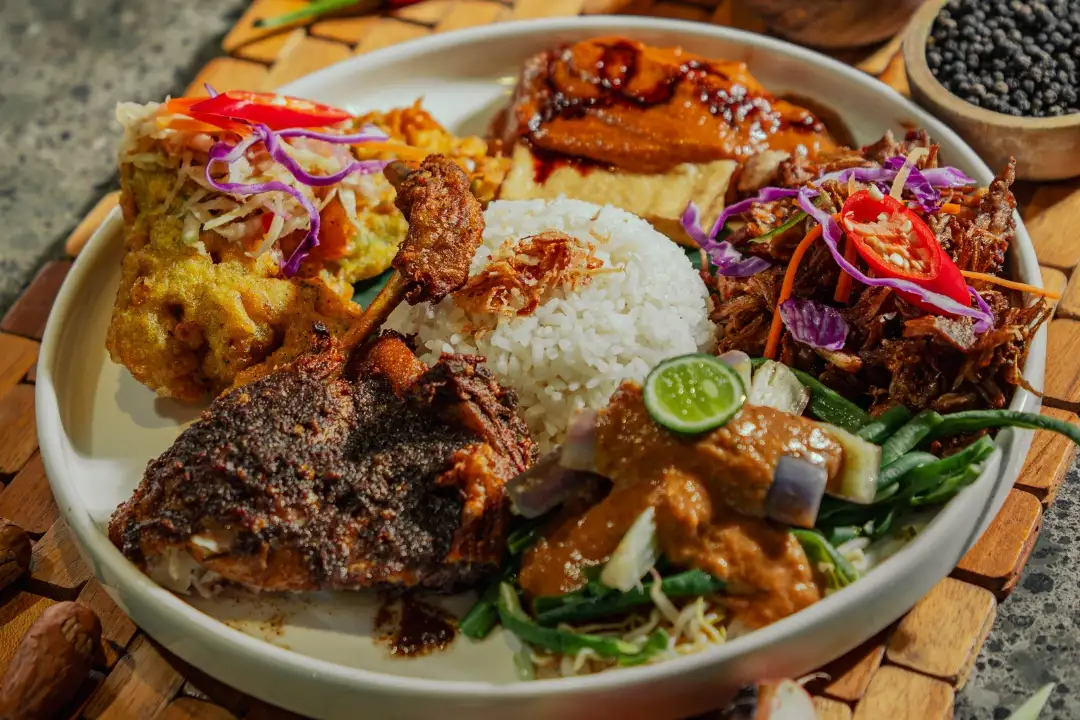
The fourth dish takes grilled chicken in another direction.
Ayam Panggang is open-grilled chicken served with Taliwang-style sambal.
It comes with:
-
Steamed rice
-
Onion crackers
-
Cabbage
-
Cucumber
-
Tomato
-
Long beans
The key combination here is:
Open-grilled chicken + Taliwang-style sambal.
The chicken gets its character from the grill.
The sambal adds another flavor direction.
Then the vegetables create freshness and contrast around the main protein.
Why Taliwang-Style Sambal Matters
Sambal is not simply there to make food hotter.
It can change the balance of a dish.
With Ayam Panggang, the Taliwang-style sambal becomes an important part of the experience.
You can combine the grilled chicken with rice and sambal.
Then move toward the vegetables.
Then return to the chicken.
The result is a plate that moves between grilled, savory, fresh, and spicy elements.
That is another example of why describing Indonesian food simply as "spicy" misses too much.
Four Dishes, Four Flavor Directions
Now compare them.
| Dish | Main Preparation | Key Flavor Elements | Texture Direction |
|---|---|---|---|
| Beef Rendang | Slow-cooked | Coconut milk, lemongrass, galangal, spices | Rich, slow-cooked |
| Sate Lilit | Grilled | Homemade spice mix, sambal | Minced and grilled |
| Pork Rib | Grilled | Spices, Asian dabu-dabu | Grilled meat |
| Ayam Panggang | Open-grilled | Taliwang-style sambal | Grilled chicken |
The table shows something important.
There is no single definition of Indonesian flavor.
The dishes use different cooking methods.
They use different proteins.
They combine seasoning differently.
They create different textures.
And they can all sit within the same local food conversation.
Indonesian Flavor Is About Layers
One of the strongest ways to understand Indonesian food is through layers.
Start with the main ingredient.
Then add the cooking method.
Then add spices.
Then consider the accompanying ingredients.
Finally, think about texture.
For example:
Beef Rendang
Beef
→ slow cooking
→ coconut milk
→ lemongrass
→ galangal
→ spices
→ rice
Sate Lilit
Minced chicken
→ homemade spice mix
→ grilling
→ sambal
→ urab
→ crackers
Pork Rib
Pork ribs
→ grilling
→ spices
→ vegetables
→ Asian dabu-dabu
Ayam Panggang
Chicken
→ open grilling
→ Taliwang-style sambal
→ rice
→ vegetables
Each dish builds flavor differently.
Coconut Is More Than an Ingredient
Coconut deserves special attention because it appears in one of the most recognizable examples of rich Indonesian flavor on this list: Beef Rendang.
Coconut milk creates richness in the dish.
But Indonesian food uses coconut in many different ways beyond simply creating heat or sweetness.
It can contribute richness.
It can balance spices.
It can become part of sauces.
It can work with savory ingredients.
That is why rich Indonesian flavor should not automatically be interpreted as "more chili."
Richness can come from the ingredients and cooking method themselves.
Spices Do More Than Make Food Hot
The same principle applies to spices.
Lemongrass.
Galangal.
Homemade spice mixes.
Traditional seasoning.
These ingredients can add aroma and depth.
They can make a dish recognizable without making it overwhelmingly spicy.
Blado's brand direction specifically emphasizes aromatic herbs, coconut, grilled aroma, different layers of flavor, and bold local taste.
That is a much broader description of Indonesian food.
Sambal Is Part of the Experience
Sambal deserves its own place in the conversation.
Sate Lilit comes with two types of sambal.
Ayam Panggang comes with Taliwang-style sambal.
Sambal can change how you experience a bite.
You can use a small amount.
You can add more.
You can combine it with rice.
You can balance it with vegetables.
That flexibility makes sambal more than a simple "spicy sauce."
It is part of the way the meal is eaten.
Grilling Creates Its Own Flavor Profile
Three of the four dishes in this article demonstrate another important element:
grilling.
Sate Lilit is grilled.
Pork Rib is grilled.
Ayam Panggang is open-grilled.
But they are not identical.
Sate Lilit uses minced chicken and homemade spice mix.
Pork Rib focuses on grilled ribs with spices and Asian dabu-dabu.
Ayam Panggang uses open-grilled chicken with Taliwang-style sambal.
Same broad cooking method.
Different ingredients.
Different preparation.
Different supporting flavors.
That is how a menu can create variety without needing every dish to be completely unrelated.
Texture Is Part of Flavor Too
When people discuss flavor, they often talk only about taste.
But texture changes the experience.
Think about the difference between:
Slow-cooked beef
and
Grilled ribs
or:
Minced grilled chicken
and
Open-grilled chicken.
Even before adding sauces or accompaniments, the preparation changes how the food feels.
Then add rice.
Sambal.
Vegetables.
Crackers.
Coconut-based sauce.
Now the meal has even more contrast.
This is why a good Indonesian meal can feel complex without needing complicated ingredients.
Four Dishes for Four Different Moods
If you want to make the choice easier, match the dish to what you feel like eating.
Want something rich?
Beef Rendang
Slow-cooked beef with coconut milk, lemongrass, galangal, and spices.
Want grilled chicken with sambal?
Sate Lilit
Minced chicken with homemade spice mix, grilled and served with two types of sambal.
Want grilled meat?
Pork Rib
Grilled pork ribs with spices, vegetables, and Asian dabu-dabu.
Want open-grilled chicken?
Ayam Panggang
Open-grilled chicken with Taliwang-style sambal and vegetables.
This is not a ranking.
It is simply a way to choose based on your appetite.
A Good Introduction to Local Food in Ubud
For travelers searching for an Indonesian restaurant Ubud, these dishes can also provide an easy way to explore different flavor profiles.
You do not need to order all four.
You can choose one based on the preparation you prefer.
If you are curious about coconut and slow cooking:
Beef Rendang.
If you want grilled minced chicken and sambal:
Sate Lilit.
If you want grilled ribs:
Pork Rib.
If you want open-grilled chicken with Taliwang-style sambal:
Ayam Panggang.
And if you are dining with friends, order different dishes and share.
That is one of the easiest ways to experience the differences side by side.
Share Four Dishes and Compare the Flavor
Imagine a table with all four.
In the center:
Beef Rendang.
Next to it:
Sate Lilit.
Then:
Pork Rib.
And:
Ayam Panggang.
Now compare them.
Which one has the richest character?
Which one has the strongest grilled aroma?
Which one gives you the most noticeable sambal experience?
Which one has the texture you enjoy most?
You may have a different answer from everyone else at the table.
And that is exactly the point.
Food preference is personal.
Indonesian Food Does Not Need to Be Complicated
For guests unfamiliar with Indonesian cuisine, the number of ingredients can sometimes make a menu look intimidating.
But you can simplify the decision.
Look at the cooking method.
Slow-Cooked
Beef Rendang.
Grilled
Sate Lilit.
Pork Rib.
Open-Grilled
Ayam Panggang.
Then look at the flavor direction.
Coconut & Aromatic
Beef Rendang.
Spice Mix & Sambal
Sate Lilit.
Grilled & Fresh
Pork Rib.
Grilled & Sambal
Ayam Panggang.
Suddenly, the menu becomes much easier to understand.
The Richness Comes from the Combination
The most interesting part about these dishes is that no single ingredient needs to do all the work.
Beef Rendang gets its character from beef, coconut milk, lemongrass, galangal, spices, and slow cooking.
Sate Lilit combines minced chicken, homemade spice mix, grilling, sambal, urab, and crackers.
Pork Rib combines grilled meat, spices, vegetables, and Asian dabu-dabu.
Ayam Panggang combines open-grilled chicken, Taliwang-style sambal, rice, and vegetables.
The flavor comes from the relationship between these elements.
That is why Indonesian food can feel rich without simply being hot.
Four Dishes. One Bigger Indonesian Food Story.
These four dishes show four different ways to approach Indonesian flavor.
Beef Rendang shows the richness of coconut milk and slow cooking.
Sate Lilit shows how a homemade spice mix and grilling can shape minced chicken.
Pork Rib shows the character of grilled meat with spices and fresh supporting elements.
Ayam Panggang shows how open grilling and Taliwang-style sambal can define a chicken dish.
Together, they give you a broader picture of what local food in Bali can offer.
Not just spicy.
Not just grilled.
Not just rich.
But aromatic, layered, smoky, savory, fresh, and textured.
Taste the Different Sides of Indonesian Flavor at Blado
If you are looking for local food Bali, start by choosing the flavor direction that sounds right to you.
Want coconut and slow cooking?
Beef Rendang.
Want minced chicken and sambal?
Sate Lilit.
Want grilled ribs?
Pork Rib.
Want open-grilled chicken with Taliwang-style sambal?
Ayam Panggang.
You can order one.
Or share several with your table.
Either way, the next time you hear someone describe Indonesian food as simply "spicy," remember that there is much more happening on the plate.
There are spices.
There is coconut.
There is grilling.
There is sambal.
There are different textures.
And there are cooking traditions that give each dish its own character.
That is the richer side of Indonesian flavor.
Ready to explore it?
Visit Blado Restaurant on Jl. Raya Pengosekan, Ubud, and discover its Balinese and Indonesian menu.
Explore the Blado menu at www.bladorestaurant.com.
