
6 Balinese Flavors You Can Taste at Blado
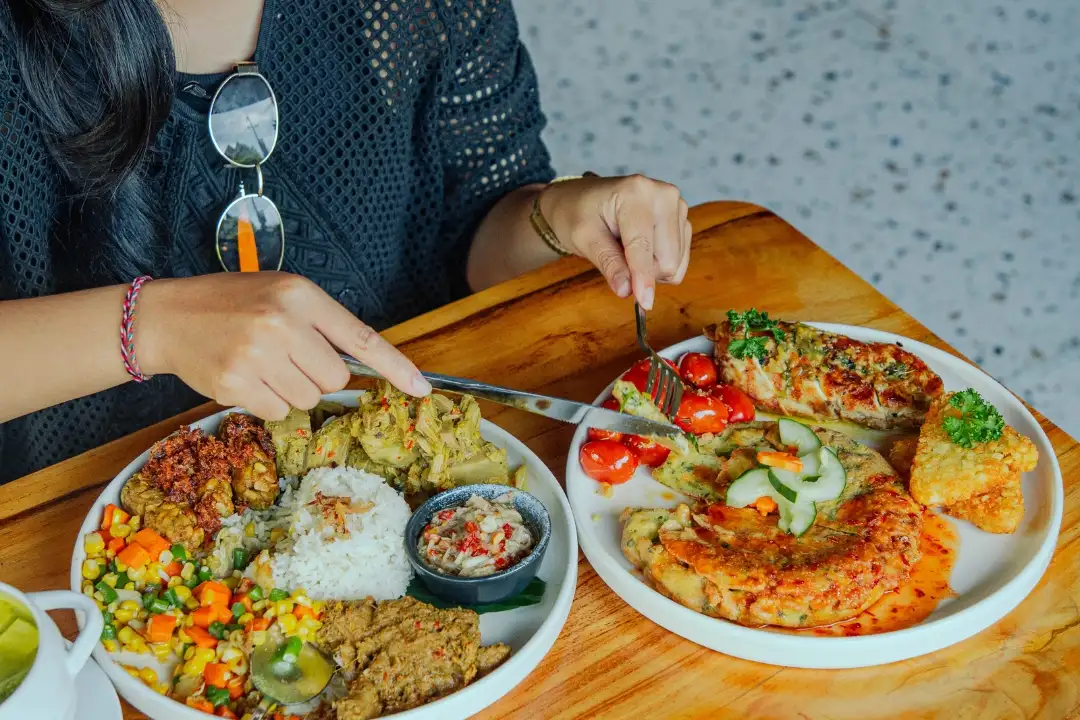
When people hear Balinese food Ubud, one of the first things they may think about is spice.
And yes, sambal is an important part of many Indonesian and Balinese dishes.
But Balinese flavor is not simply about making food spicy.
There is much more happening on the plate.
You can find aromatic herbs, traditional spice mixtures, coconut, grilled aromas, sambal, and different textures working together in the same meal.
At Blado Restaurant, these elements appear across the Balinese and Indonesian menu.
You can experience them through dishes such as Sate Lilit, Nasi Campur Bali, Nasi Goreng Pork Belly, Ayam Panggang, Crispy Duck, and Beef Rendang.
Each dish approaches local flavor differently.
Some are grilled.
Some are slow-cooked.
Some rely on sambal.
Some bring several textures together on one plate.
And some use coconut milk or traditional spice combinations to create a richer flavor base.
So if you want to understand authentic Balinese flavor beyond the idea of “spicy,” here are six elements to look for at Blado.
1. Sambal Brings Fresh Heat and Contrast
Let's start with sambal.
Sambal is not simply there to make a dish hotter.
It can add freshness, acidity, aroma, and contrast to the main ingredients.
One example at Blado is Nasi Campur Bali, which includes shredded chicken with sambal matah.
The dish also includes crispy fried pork belly, chicken sate lilit, fresh urab, grilled prawn, steamed rice, and onion crackers.
The sambal matah becomes one part of a much larger combination.
You can have the richness of pork belly.
Then a fresh sambal element.
Then grilled chicken.
Then vegetables.
Then prawn.
Then something crispy.
This creates contrast rather than simply adding heat.
Sambal also appears with other local dishes.
Sate Lilit is served with two types of sambal, while Crispy Duck is also served with two types of sambal.
This shows how sambal can function as part of the overall plate rather than being the entire flavor story.
What to notice:
Heat, freshness, contrast, and how the sambal interacts with the main protein.
2. Aromatic Herbs Build the Flavor Base
Another important part of Balinese and Indonesian food is the use of aromatic herbs.
They help create flavor before you even add sambal.
At Blado, this can be seen across several dishes.
Soto Ayam, for example, uses aromatic herbs and traditional spices in its savory spiced broth.
Bolognaise Pasta on the western menu also uses aromatic herbs, showing that the ingredient language is not limited to local dishes.
In local food, aromatic ingredients can help create a deeper base for the dish.
The result is not necessarily hot.
It can be savory, fragrant, earthy, or warm.
That distinction matters when understanding Balinese food.
A dish can have a strong aromatic character without being overwhelmingly spicy.
For guests visiting Ubud for the first time, this is one of the easiest ways to rethink what “spicy food” actually means.
Spice is only one part of the flavor.
Aromatic herbs help create the foundation around it.
What to notice:
Fragrance and depth before the heat reaches your palate.
3. Coconut Creates Richness and Balance
Coconut is another important element in Indonesian cooking.
At Blado, you can see this clearly in Beef Rendang.
The dish is a slow-cooked Indonesian beef stew prepared with coconut milk, lemongrass, galangal, and spices.
The coconut milk contributes richness to the dish while the lemongrass, galangal, and spices build the aromatic character.
This is very different from a dish where chili is the dominant feature.
The flavor develops through several ingredients working together.
That is an important point when exploring a local restaurant Ubud experience.
Local flavor is not always about intensity.
Sometimes it is about layering.
Coconut milk can provide a rich base.
Aromatic herbs can provide fragrance.
Spices can add warmth and complexity.
Slow cooking allows those elements to come together.
What to notice:
Richness, aroma, and how coconut balances traditional spices.
4. Grilling Adds a Different Kind of Flavor
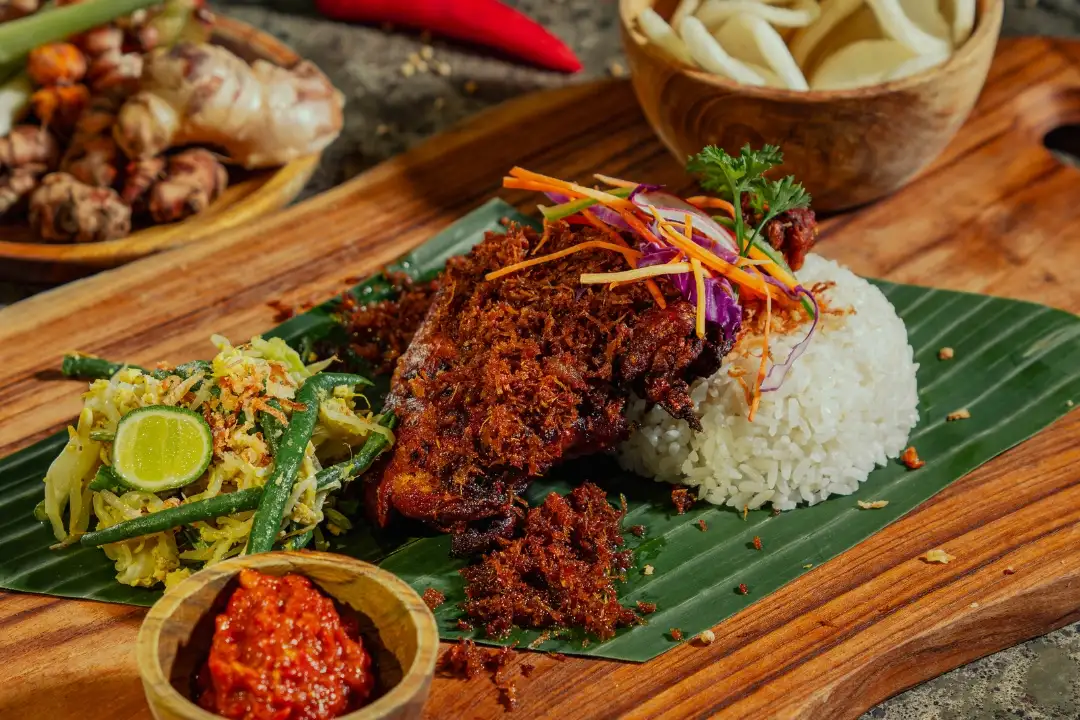
Cooking method can change how local ingredients taste.
At Blado, several dishes use grilling to create another layer.
Sate Lilit uses minced chicken mixed with a homemade spice mix before being grilled.
The grilling process adds a distinct cooked and lightly smoky character to the seasoned chicken.
Sate Ayam is also grilled after being marinated in aromatic spices.
Ayam Panggang is open-grilled chicken served with Taliwang-style sambal.
And Pork Rib is grilled with spices and served with vegetables and Asian dabu-dabu.
These dishes demonstrate that grilled aroma is part of the wider flavor experience.
The spices do not exist separately from the cooking method.
The seasoning meets the heat of the grill.
The outside develops a different character.
The aroma becomes part of what you experience before the first bite.
This is one reason grilled dishes can feel so different from slow-cooked dishes even when both use spices.
What to notice:
Grilled aroma, cooked spices, texture on the outside, and the flavor of the protein underneath.
5. Spice Mixtures Create Depth, Not Just Heat
The phrase “Balinese spices” can sometimes make people think only about chili.
But traditional spice mixtures are more complex than that.
At Blado, the idea appears in several dishes.
Nasi Goreng Pork Belly uses traditional spices in its Balinese-style fried rice.
Mie Blado Bali also uses traditional spices in its fried noodles.
Sate Lilit uses a homemade spice mix with minced chicken before grilling.
Beef Rendang combines coconut milk, lemongrass, galangal, and spices through slow cooking.
These dishes demonstrate different ways of using spice mixtures.
The spices can become part of the fried rice.
They can season noodles.
They can bind with minced chicken.
They can develop into a rich sauce around slow-cooked beef.
The result is that the same broad idea of “spices” can produce very different dishes.
That is why trying several local dishes can be more informative than judging Balinese food from one plate.
What to notice:
Which spices are supporting the main ingredient and how the cooking method changes their character.
6. Texture Is Part of the Flavor Experience
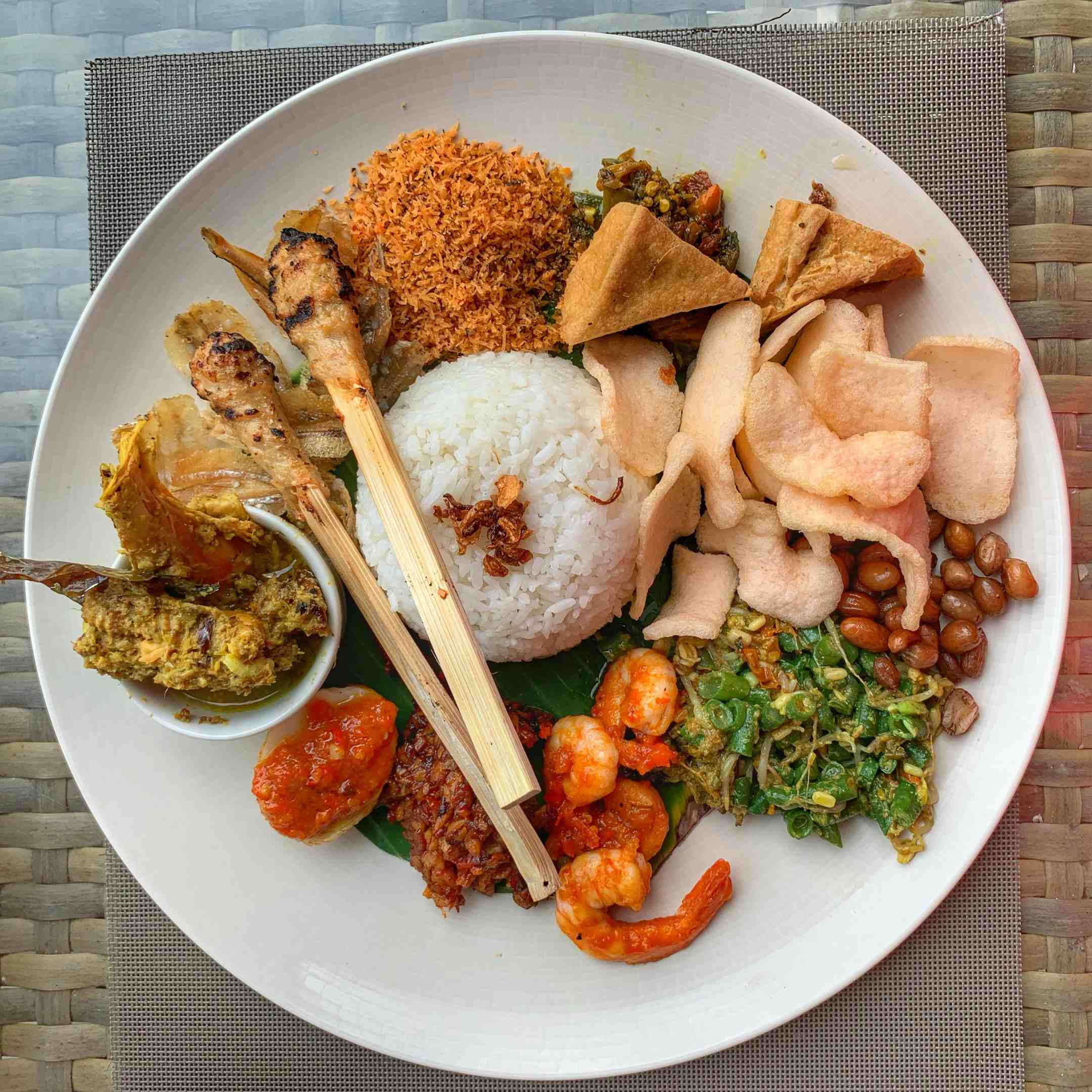
Flavor is not only what you taste.
Texture changes how you experience the dish as well.
Blado's local menu offers several examples.
Take Nasi Campur Bali.
One plate includes:
- Crispy fried pork belly
- Soft steamed rice
- Grilled chicken sate lilit
- Shredded chicken
- Fresh urab
- Grilled prawn
- Onion crackers
That means the plate does not have one texture.
You can move from soft rice to crispy pork belly.
From tender chicken to fresh vegetables.
From grilled prawn to crunchy onion crackers.
The contrast makes the dish more dynamic.
Crispy Duck works in a similar way.
The duck is cooked slowly until tender and then fried until crispy.
It is served with steamed rice, sambal, onion crackers, and fresh urab.
Again, the dish combines different textures.
Tender meat.
Crispy exterior.
Soft rice.
Fresh vegetables.
Crunchy crackers.
That is part of what makes a local dish satisfying.
What to notice:
Soft, crispy, tender, fresh, crunchy, and how those textures change from one component to another.
Balinese Flavor Is About Balance
Once you look at these six elements together, it becomes easier to understand why Balinese food is more than “spicy food.”
Consider a single plate.
It might have:
Sambal for freshness and heat.
Aromatic herbs for fragrance.
Coconut for richness.
Grilling for cooked and smoky aroma.
Spice mixtures for depth.
Different textures for contrast.
The result is a more complete flavor experience.
And not every dish needs all six elements.
Some may highlight sambal.
Others may focus on grilled aroma.
Others may use coconut milk and slow cooking.
Some may combine several textures.
That variation is part of the appeal of exploring a local menu.
Taste the Difference Through Blado's Menu
If you want to experience these elements directly, you can explore several dishes at Blado.
Nasi Campur Bali
A varied Balinese plate combining pork belly, chicken sate lilit, shredded chicken with sambal matah, fresh urab, grilled prawn, and onion crackers.
Flavor focus: Variety, sambal, grilled elements, and contrasting textures.
Nasi Goreng Pork Belly
Balinese-style fried rice with traditional spices and pork belly, served with crackers and acar.
Flavor focus: Traditional spices, savory fried rice, rich pork belly, and crunch.
Sate Lilit
Minced chicken combined with a homemade spice mix and grilled, served with steamed rice, two sambals, fresh urab, and onion crackers.
Flavor focus: Spice mixture, grilling, sambal, and texture.
Ayam Panggang
Open-grilled chicken with Taliwang-style sambal, steamed rice, vegetables, and onion crackers.
Flavor focus: Grilled aroma, sambal, vegetables, and crunch.
Crispy Duck
Slow-cooked marinated duck fried until crispy, served with steamed rice, two sambals, onion crackers, and fresh urab.
Flavor focus: Tender and crispy textures, sambal, and grilled or cooked spice character.
Beef Rendang
Slow-cooked beef prepared with coconut milk, lemongrass, galangal, and spices, served with steamed rice.
Flavor focus: Coconut richness, aromatic herbs, spice mixture, and slow cooking.
Each dish offers a different entry point into local flavor.
Start with Sambal If You Want Freshness
If you enjoy dishes with a fresh and lively element, look toward dishes served with sambal.
Nasi Campur Bali includes shredded chicken with sambal matah.
Sate Lilit comes with two types of sambal.
Crispy Duck is also served with two types of sambal.
You can experience how sambal interacts differently with chicken, duck, pork, vegetables, and rice.
This is a useful way to understand that sambal is not simply a measurement of how spicy a dish is.
It can also change the balance of the entire plate.
Choose Grilled Dishes for Aroma
If aroma is what attracts you to food, grilled dishes give you another direction.
Sate Lilit, Sate Ayam, Ayam Panggang, and Pork Rib all use grilling in different ways.
The cooking method creates another layer between the seasoning and the final plate.
For guests who enjoy grilled meat and aromatic seasoning, this can be a good place to explore the local menu.
Choose Rendang for Richness
If you prefer richer, slow-cooked flavors, Beef Rendang provides a completely different experience.
The combination of coconut milk, lemongrass, galangal, and spices creates a flavor profile that is deeper and more developed through slow cooking.
It demonstrates why Indonesian food cannot be reduced to one simple category such as spicy.
There is richness.
There is aroma.
There is warmth from spices.
And there is the texture of slow-cooked beef.
Choose Nasi Campur for Variety
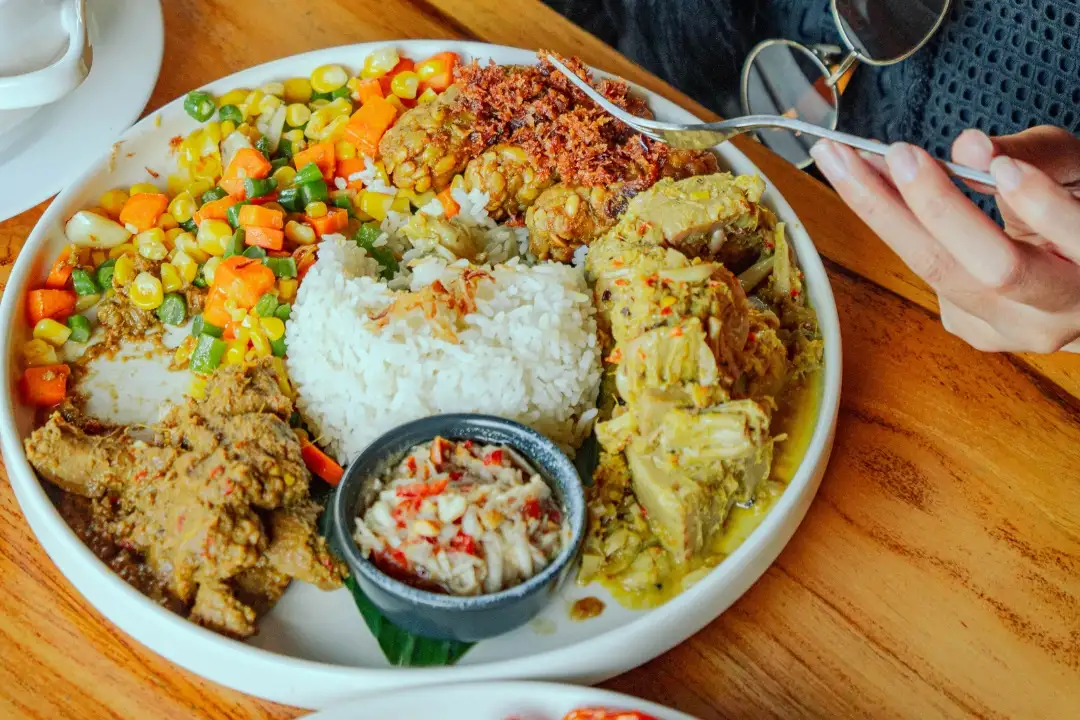
If you are not sure which local flavor you want to explore first, Nasi Campur Bali gives you several in one plate.
That is one of its strengths.
You do not have to commit to one preparation.
The plate includes several proteins and accompaniments.
You can compare textures.
You can try sambal.
You can taste urab.
You can experience sate lilit.
You can try grilled prawn.
You can see how crispy pork belly works alongside softer ingredients.
For guests exploring Balinese food Ubud for the first time, that variety can make the experience easier and more interesting.
Local Ingredients Make the Experience More Meaningful
Blado's broader brand philosophy is:
Connecting Farms & Tables, Locally Grown.
The restaurant's positioning connects local ingredients, Balinese and Indonesian flavors, local farmers, community, warm hospitality, and the dining table.
That means the local food experience is not treated as decoration.
The ingredients and flavors are part of the restaurant's identity.
You can see this in the menu.
Tempeh.
Tofu.
Cassava.
Coconut.
Aromatic herbs.
Traditional spices.
Local vegetables.
Sambal.
These ingredients appear across different dishes and combinations.
They give guests more opportunities to explore the local side of the menu according to their own preferences.
You Do Not Need to Love Spicy Food to Explore Balinese Flavor
This may be the most important point.
If you do not enjoy very spicy food, that does not mean you need to avoid Balinese cuisine.
There are different flavor directions to explore.
You can focus on:
- Grilled aroma
- Coconut richness
- Aromatic herbs
- Slow-cooked spices
- Savory seasoning
- Fresh vegetables
- Different textures
Sambal can be adjusted according to your preference when appropriate, but specific customization should be confirmed with the restaurant team.
The menu gives you more options than simply choosing between “spicy” and “not spicy.”
That is why trying different dishes can be useful.
A Simple Way to Explore Balinese Flavor at Blado
If you want to make your visit into a small flavor exploration, start with different preparations rather than ordering several dishes that taste similar.
For example:
Sate Lilit
for grilled chicken and homemade spice mix.
Nasi Campur Bali
for variety, sambal matah, vegetables, pork belly, prawn, and different textures.
Beef Rendang
for coconut milk, aromatic herbs, and slow-cooked spices.
This gives you three very different ways to experience local flavor.
You can also add Nasi Goreng Pork Belly if you want to see how traditional spices work in fried rice.
There is no need to order everything at once.
Choose based on your appetite and dining group.
Balinese Flavor Is a Combination, Not a Single Taste
The next time someone says Balinese food is simply spicy, look a little closer.
Look at the sambal.
Look at the herbs.
Look for coconut.
Notice the spice mixture.
Pay attention to the grilled aroma.
Then think about the texture.
Is the meat tender?
Is something crispy?
Is there a fresh vegetable component?
Is there a crunchy cracker?
That is where the wider flavor experience becomes easier to understand.
At Blado, these elements appear in different combinations across the local menu.
Nasi Campur Bali shows variety.
Sate Lilit highlights grilled chicken and spice mixture.
Beef Rendang shows the richness of coconut and slow cooking.
Nasi Goreng Pork Belly brings traditional spices into fried rice.
Crispy Duck combines tender and crispy textures with sambal.
Ayam Panggang brings grilled chicken together with Taliwang-style sambal.
Each dish tells you something different about local flavor.
And you do not need to decide which one is the most authentic or the best.
Simply choose the direction you want to explore.
Want to discover more Balinese flavors in Ubud?
Visit Blado Restaurant on Jl. Raya Pengosekan and explore the local menu at your own pace.
Which flavor would you try first: sambal, grilled aroma, coconut richness, traditional spices, or crispy textures?
Discover the menu at www.bladorestaurant.com.
