
From Local Farms to Your Table at Blado
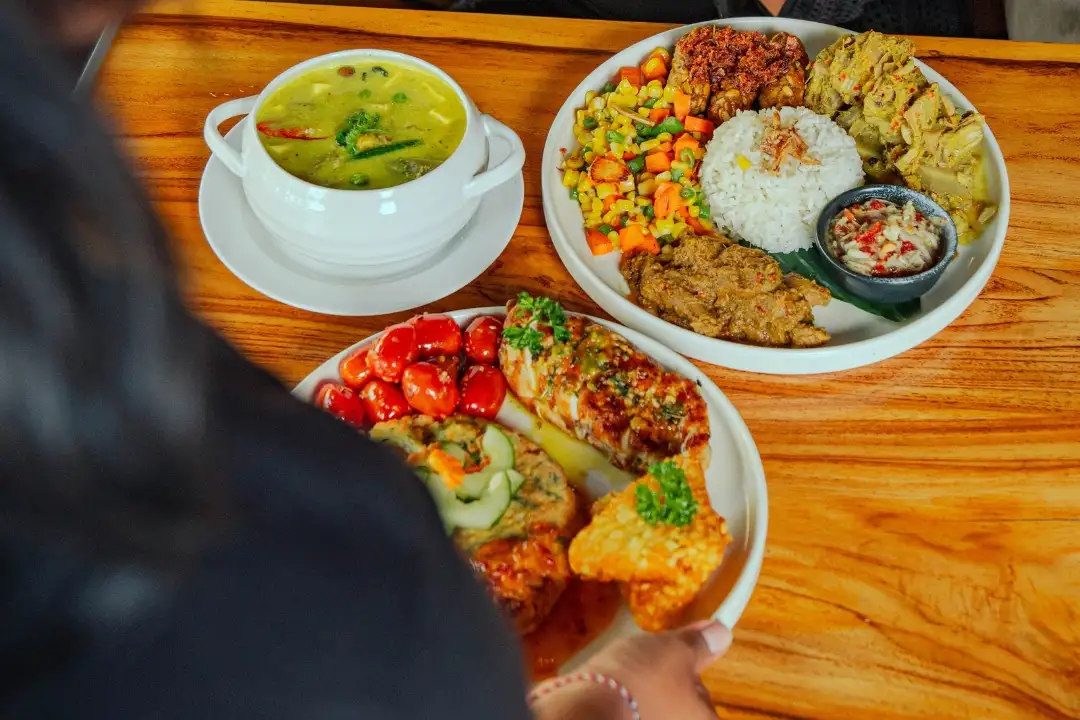
Every dish begins before it reaches the kitchen.
It begins with ingredients, the people who grow or produce them, and the choices a restaurant makes about what it brings to the table.
At Blado Restaurant, this connection shapes the brand philosophy:
Connecting Farms & Tables, Locally Grown.
Blado was built with a commitment to Bali, its food traditions, local communities, and natural environment. The restaurant brings local ingredients, Balinese and Indonesian flavors, warm hospitality, and a welcoming dining space together in Ubud.
This does not mean every ingredient comes from one farm or that every item follows the same sourcing process. Blado does not make unsupported claims about specific farms, organic certification, or ingredients grown on its own property.
The idea is more practical.
Blado considers local sources, supports farmers, artisans, and small businesses, and uses its menu to keep local ingredients and food traditions connected to the guest experience.
Here is how that journey moves from local farms to the table.
It Starts with Local People

A strong farm to table Ubud story should begin with the people behind the ingredients.
Local farmers play an important role in Bali’s food system. They grow produce, maintain agricultural knowledge, and support the supply of ingredients used across homes, markets, hotels, and restaurants.
Blado’s mission includes supporting local farmers and nearby communities.
The restaurant also recognises the role of local artisans and small businesses. These groups are part of the wider connection between food, culture, community, and hospitality.
This support is not only a marketing message.
It is part of why Blado was created.
The restaurant began with the vision of two young Balinese founders who saw rapid development happening across Bali. They also saw that local people, traditions, and the natural environment could sometimes be overlooked.
Blado was developed as more than a place serving meals.
It was created as a movement connected to three important areas:
-
Culture
-
Community
-
Nature
These values help guide how Blado talks about ingredients, menu choices, hospitality, and the people connected to the restaurant.
For guests searching for local farmers Ubud stories, Blado offers a dining concept that recognises the importance of local food systems without making claims that cannot be verified.
Local Ingredients Bring the Story into the Kitchen
The next part of the journey is the ingredient itself.
Blado’s brand values include Local Ingredients. This reflects the restaurant’s commitment to using and supporting produce and products connected to local farmers and artisans.
Local ingredients help give the menu a stronger connection to Bali and Indonesia.
They also support dishes that use familiar regional components such as rice, vegetables, herbs, spices, coconut, sambal, cassava, tempeh, and other ingredients found across the menu.
The phrase locally grown ingredients does not need to become an abstract statement.
Guests can understand the idea through the food.
It appears in the vegetables served with breakfast.
It can be seen in local dishes such as Nasi Campur Bali, Sate Lilit, Beef Rendang, Soto Ayam, and Nasi Goreng Pork Belly.
It can also appear through breakfast choices such as cassava, tempeh, eggplant, long beans, sprouts, and bumbu pecel.
The local connection becomes stronger when ingredients remain part of a clear dish rather than being hidden behind vague claims.
Blado does not need to describe every ingredient as rare, premium, or organic.
The stronger message is simple.
Local ingredients help keep Bali’s food character present at the table.
Traditional Flavors Guide the Kitchen
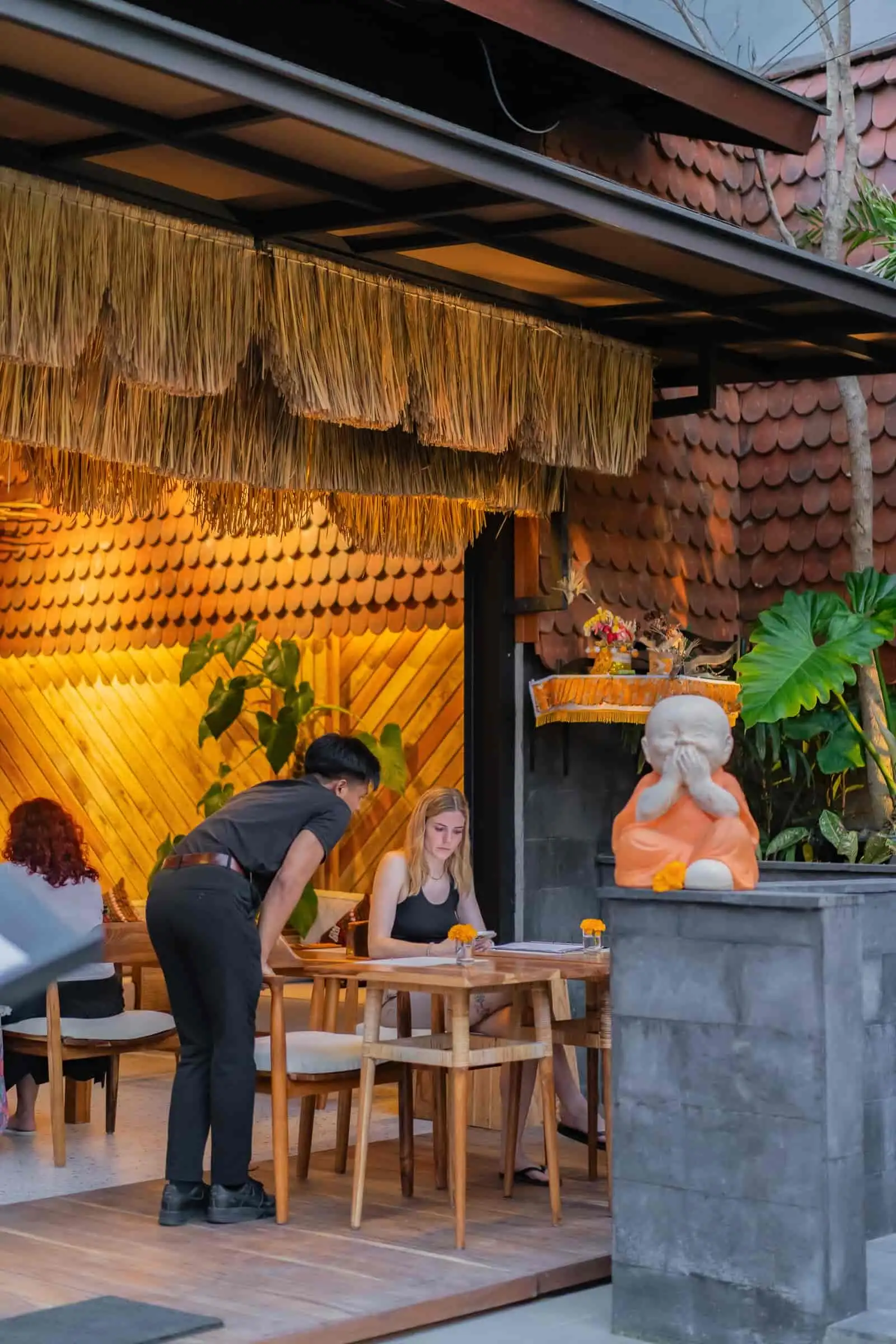
Ingredients alone do not create the full experience.
The kitchen also needs to understand how they should be prepared.
Blado’s brand values include Authentic Recipes and Bold Flavors. The restaurant respects traditional cooking values, local recipes, and Indonesian seasoning while also offering a diverse menu from breakfast until evening.
This means the kitchen works with more than one type of flavor.
Balinese and Indonesian food can include:
-
Aromatic herbs
-
Rich spices
-
Sambal
-
Coconut
-
Grilled aromas
-
Slow-cooked meat
-
Fresh vegetables
-
Different layers of seasoning
Local food should not be described only as spicy.
The character often comes from the balance between rich, fresh, grilled, crispy, soft, and aromatic elements.
Blado’s Nasi Campur Bali is a clear example.
The plate includes steamed rice, crispy fried pork belly, chicken sate lilit, shredded chicken with sambal matah, fresh urab, grilled prawn, and onion crackers.
Each component uses a different texture or preparation.
Nasi Goreng Pork Belly follows another direction. It combines Balinese-style fried rice with traditional spices, pork belly, crackers, and acar.
Both dishes are confirmed best sellers.
Both connect familiar rice-based dining with stronger local character.
This is how the kitchen becomes part of the source-to-table story. It takes ingredients and prepares them in a way that respects local flavor, traditional references, and the identity of the dish.
The Menu Connects Tradition with Choice
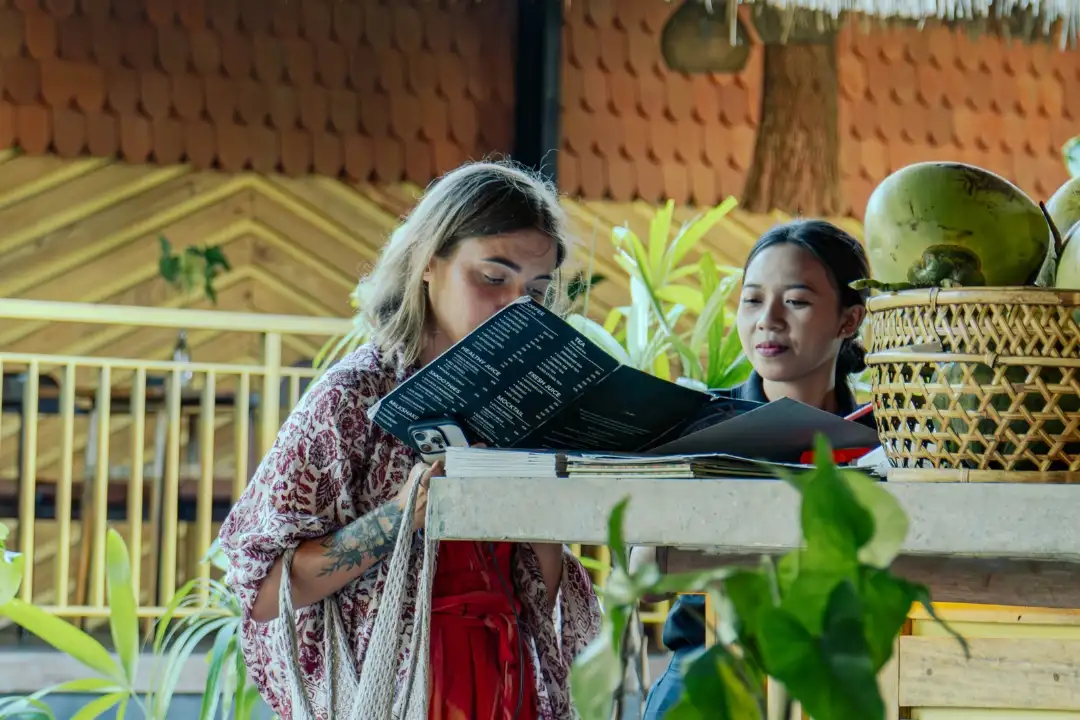
A local restaurant Bali visitors can approach should offer local character without making the menu difficult to understand.
Blado does this through a diverse selection.
Guests can choose Balinese and Indonesian dishes, breakfast, western food, small bites, salads, soup, desserts, coffee, cocktails, beer, and other beverages.
This variety makes Blado suitable from morning until evening.
However, the menu still returns to the same foundation.
Local ingredients, authentic flavors, warm hospitality, and the table remain central to the experience.
The Make Your Own Breakfast concept shows how local and familiar choices can work together.
Guests follow four steps:
-
Choose an egg
-
Add a protein
-
Pick the sides
-
Complete the plate with salad or bakery and one free topping
Someone may build a classic breakfast with scrambled egg, bacon, hash brown, grilled tomato, and sourdough toast.
Another guest may choose Omelette Padang, cassava, tempeh, parata, and bumbu pecel.
Both guests use the same breakfast system, but each plate reflects a different preference.
This flexibility helps Blado remain welcoming to international travelers, local guests, couples, families, and groups.
It also shows that local food does not need to be presented as something difficult or exclusive.
Guests can discover it through simple choices.
Sustainability Is a Direction, Not an Empty Claim
Blado’s mission includes support for sustainable practices and the preservation of Bali’s natural beauty.
This direction matters, but it must be communicated carefully.
Blado should not claim certifications that have not been confirmed.
It should not state that every ingredient is organic.
It should not claim that all produce comes directly from one named farm.
It should not say that every menu item has zero environmental impact.
A responsible sustainable dining Bali message begins with verified commitments.
For Blado, these include support for local farmers, artisans, small businesses, local ingredients, cultural preservation, community empowerment, and practices that consider Bali’s natural environment.
This creates a more honest form of storytelling.
The restaurant can explain what it values without turning sustainability into a vague label.
Guests are given a clear reason to understand Blado as a restaurant connected to local people and place.
The story remains grounded in actual brand commitments.
The Table Completes the Connection
The journey does not end when the food leaves the kitchen.
It ends when the plate reaches the guest.
Blado’s table is where farmers, ingredients, recipes, hospitality, culture, and community come together.
A guest may first understand this through Nasi Campur Bali.
Another may begin with Nasi Goreng Pork Belly.
Someone visiting in the morning may build a breakfast plate using eggs, vegetables, tempeh, cassava, or bakery choices.
A couple may stay for cocktails and conversation in the evening.
The order may change, but the role of the table remains the same.
It is where the guest experiences the restaurant’s values through real food and service.
This is why warm hospitality is an important part of the Blado story.
Guests should not feel intimidated by local menu names or unfamiliar ingredients.
The restaurant experience should feel welcoming, clear, and easy to approach.
Staff moments, menu explanations, customer reviews, and dining conversations all help connect the brand philosophy to real people.
A community restaurant is not only a place that speaks about local support.
It should also create a space where guests feel included in the experience.
The Guest Becomes Part of the Story
The guest completes the source-to-table connection by choosing, tasting, and understanding the menu.
This can happen in small ways.
A first-time visitor may try sate lilit as part of Nasi Campur Bali.
An international traveler may discover that Balinese flavor includes more than chilli.
A family may choose different breakfast plates through Make Your Own Breakfast.
A returning guest may order Nasi Goreng Pork Belly because it has become a familiar favorite.
The dining experience helps local food remain visible, relevant, and appreciated.
Guests are not asked to study a complicated philosophy before ordering.
They can understand the Blado story through the menu.
Local ingredients become part of real dishes.
Traditional flavors become easier to approach.
Hospitality makes the experience feel comfortable.
The table connects all these parts in one place.
A Local Dining Experience in Pengosekan

Blado Restaurant is located on Jl. Raya Pengosekan, Ubud.
Its location makes it a practical choice for breakfast, lunch, dinner, coffee, or cocktails during a day in Ubud.
However, the reason to visit goes beyond convenience.
Blado gives guests a way to experience Bali through ingredients, flavor, hospitality, and community.
For travelers searching for authentic food Ubud, the strongest starting point is not an exaggerated claim about being the most authentic restaurant.
It is a clear menu, verified local dishes, thoughtful brand values, and a dining experience that remains connected to Bali.
Blado respects traditional recipes without claiming to represent every form of Balinese cuisine.
It supports local ingredients without inventing sourcing stories.
It communicates sustainability as a commitment rather than an unverified label.
This makes the brand philosophy easier to trust.
From Farms to Ingredients to the Table
The Blado journey can be understood in four simple parts.
Local farmers and producers support the ingredients.
The ingredients enter the kitchen.
The kitchen prepares Balinese and Indonesian flavors through clear menu choices.
The guest experiences the final connection at the table.
This is the meaning behind:
Connecting Farms & Tables, Locally Grown.
It is not only a tagline placed below the logo.
It shapes the way Blado talks about farmers, ingredients, traditional recipes, local communities, hospitality, and dining in Ubud.
Visit Blado Restaurant on Jl. Raya Pengosekan and discover how local ingredients, authentic flavors, and warm hospitality come together at the table.
Explore the menu at www.bladorestaurant.com.
