
Nasi Goreng or Nasi Campur Which Blado Best Seller Wins Your Table
Some restaurant decisions are easy. Others begin the moment two equally tempting plates appear on the menu.
At Blado Restaurant, that decision often comes down to Nasi Goreng or Nasi Campur.
Both are confirmed Blado best sellers. Both carry strong Balinese and Indonesian character. Both are satisfying rice-based choices, but they offer very different experiences once they arrive at the table.
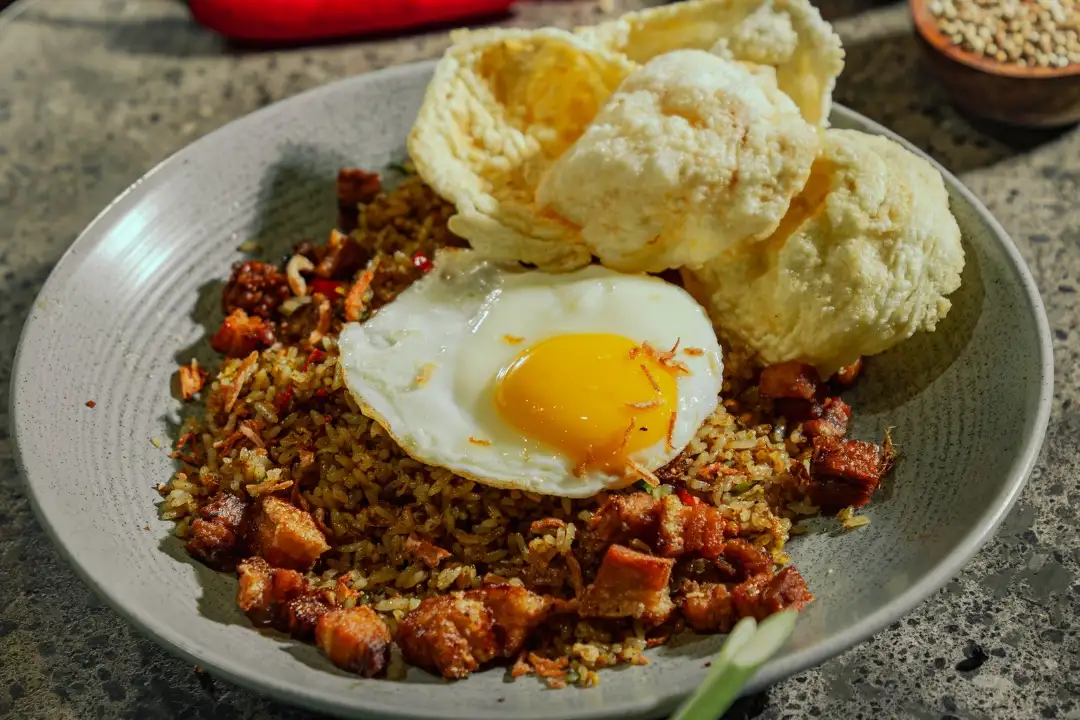
Nasi Goreng Pork Belly brings everything together in one bold, familiar dish. The rice is cooked with traditional spices, then served with pork belly, crackers, and acar.
Nasi Campur Bali takes a different approach. Instead of mixing the main elements together, it presents several local components in one plate. Guests receive steamed rice, crispy fried pork belly, chicken sate lilit, shredded chicken with sambal matah, fresh urab, grilled prawn, and onion crackers.
One feels unified and comforting. The other feels varied and exploratory.
So which Blado best seller deserves a place on your table?
There is no official winner. The better choice depends on the type of local dining experience you want in Ubud.
The First Impression on the Table
Food often begins with the eyes.
Before guests taste the first bite, visual presentation already shapes their expectations. This is where Nasi Goreng and Nasi Campur immediately move in different directions.
Nasi Goreng Pork Belly has a focused appearance. The seasoned fried rice becomes the central feature, while the pork belly, crackers, and acar complete the plate. It feels direct and familiar. Guests can quickly understand what they are ordering.
The warm color of the fried rice and the rich appearance of the pork belly create a plate that feels comforting and satisfying. It is a strong choice for guests who prefer a meal with one clear identity.
Nasi Campur Bali is more detailed.
Several components share the same plate, creating differences in color, shape, and texture. The steamed rice provides the base, while pork belly, sate lilit, shredded chicken, sambal matah, urab, grilled prawn, and crackers each remain visually distinct.
This makes Nasi Campur feel like a small introduction to several Balinese dishes at once.
In a visual food battle Ubud visitors might share on social media, Nasi Goreng would stand out for its rich and focused presentation. Nasi Campur would attract attention through variety and detail.
The choice depends on what catches your eye first.
Do you prefer one bold plate or several local elements presented together?
The Texture Comparison
Texture is one of the biggest differences between these two best sellers.
Nasi Goreng Pork Belly offers a more consistent base. The fried rice carries the seasoning throughout the dish, making each spoonful feel connected. The pork belly adds a richer and firmer contrast, while the crackers bring crunch and the acar provides a lighter accent.
The experience feels balanced but uncomplicated.
Guests can combine the rice, pork belly, and accompaniments in one bite without having to move between many separate components. This makes Nasi Goreng easy to enjoy and familiar even for people who are trying Indonesian food for the first time.
Nasi Campur Bali creates more variation from one bite to the next.
The steamed rice acts as a neutral base, but each side brings a different texture. Crispy fried pork belly adds crunch and richness. Chicken sate lilit brings a grilled and seasoned texture. Shredded chicken feels softer, while sambal matah adds freshness.
Fresh urab introduces vegetables, grilled prawn adds a firmer seafood element, and onion crackers complete the plate with another crisp layer.
No two bites need to feel exactly the same.
Guests can try each element separately or combine several parts with the rice. This makes Nasi Campur more interactive at the table. It encourages people to explore the plate and discover which component they enjoy most.
For a simple texture comparison:
Nasi Goreng feels connected, rich, and consistent.
Nasi Campur feels varied, layered, and exploratory.
Neither approach is better. They simply suit different preferences.
One Complete Dish or Several Local Elements
The menu style is another important difference.
Nasi Goreng Pork Belly is built as one complete dish. The rice and traditional spices create the main flavor profile, while the pork belly, crackers, and acar support it.
This style works well for guests who want a clear, straightforward order. There is no need to study many separate ingredients before deciding how to approach the plate.
Nasi Goreng is also one of Indonesia’s most familiar dishes. Many international travelers already recognize it, even when they have not tried the Balinese-style version.
That familiarity can make Nasi Goreng a comfortable first step into local food.
Nasi Campur follows a collection-style format.
Rather than focusing on one main preparation, it combines several Balinese components around steamed rice. The plate introduces guests to grilled, crispy, fresh, and seasoned elements in one order.
This makes it useful for travelers who want to discover more than one type of local flavor without ordering several full dishes.
For anyone searching for Nasi Campur Ubud, this is part of the appeal. A nasi campur plate can act as a guide to local dining because it shows how different proteins, vegetables, sambal, and accompaniments can come together.
The choice becomes a question of dining style.
Do you want one dish with a clear central flavor?
Or do you want a plate that allows you to move between several different components?
Which One Feels More Familiar
For many guests, Nasi Goreng feels more familiar.
Fried rice is widely known, easy to understand, and available in many parts of Indonesia. The Blado version adds local character through Balinese-style preparation, traditional spices, and pork belly.
This makes it approachable without feeling generic.
Guests who are new to Indonesian cuisine may choose Nasi Goreng because they already understand the basic structure of the dish. The local seasoning and pork belly then provide something different from the fried rice they may have tried elsewhere.
Nasi Campur requires slightly more curiosity.
The plate includes ingredients and preparations that may be less familiar to international visitors, such as chicken sate lilit, sambal matah, and urab. However, the steamed rice base makes the experience easy to approach.
Guests can begin with the component that feels most familiar and gradually try the others.
This makes Nasi Campur a strong Bali food choice for travelers who want a broader introduction to Balinese flavor.
Nasi Goreng welcomes guests through familiarity.
Nasi Campur invites them through variety.
Which One Shows More Variety
When it comes to the number of distinct components, Nasi Campur Bali clearly offers more variety.
The plate includes pork, chicken, seafood, vegetables, sambal, rice, and crackers. Each element has its own role and can be tasted separately.
This makes Nasi Campur a useful choice for sharing a conversation around food. Guests can discuss which part they prefer, compare textures, or recommend individual components to each other.
It is naturally suited to an Indonesian food poll because there are several details people can react to.
Some may immediately choose the crispy pork belly.
Others may prefer the sate lilit, grilled prawn, fresh urab, or chicken with sambal matah.
Nasi Goreng Pork Belly offers variety in a more compact form. The rice, pork belly, crackers, and acar still provide contrast, but everything supports one main dish rather than appearing as several separate features.
For guests who want a focused meal, this simplicity is an advantage.
More components do not automatically make a dish more satisfying. Sometimes the strongest choice is the one that brings a smaller number of elements together clearly.
The Comfort Choice
Nasi Goreng often wins the comfort-food conversation.
The combination of seasoned fried rice and pork belly feels warm, filling, and familiar. It is the type of dish guests can order when they want something straightforward after a day of exploring Ubud.
The rice carries the main flavor, so the experience remains consistent from the first spoonful to the last.
This is one reason searches for Nasi Goreng Ubud remain popular. Travelers often want a recognizable Indonesian dish, but they still want to experience a version with local character.
Blado’s Nasi Goreng Pork Belly answers both needs.
It is familiar enough to feel comfortable and distinctive enough to represent the restaurant’s focus on bold local flavors.
Nasi Campur can also feel comforting, but in a different way. It resembles a complete rice plate with several accompaniments, allowing guests to create their preferred combinations as they dine.
The comfort comes from choice rather than consistency.
The Discovery Choice
If Nasi Goreng is the comfort choice, Nasi Campur is the discovery choice.
It is especially suitable for first-time visitors who want to understand several parts of Balinese food in one order. The plate introduces grilled meat, crispy pork, seafood, vegetables, sambal, and sate without requiring several menu selections.
Each component can lead to another menu discovery.
Guests who enjoy chicken sate lilit may later try Blado’s full Sate Lilit dish. Those who prefer richer meat may continue with Pork Rib or Crispy Duck. Guests drawn to sambal matah and urab can further explore the fresh and aromatic side of Balinese dining.
Nasi Campur does not explain every part of Balinese cuisine, but it offers a practical starting point.
That makes it useful for travelers creating Ubud food content or anyone who wants their first local order to include several different tastes.
How Both Dishes Reflect Blado’s Character
The comparison is not only about which dish looks or tastes more appealing.
Both best sellers connect directly to Blado Restaurant’s local character.
Blado follows the philosophy Connecting Farms & Tables, Locally Grown. The restaurant brings local ingredients, Balinese and Indonesian flavors, warm hospitality, culture, community, and the table into one dining experience.
Nasi Goreng Pork Belly reflects that identity through a familiar Indonesian dish prepared with Balinese-style flavor and traditional spices.
Nasi Campur Bali reflects it through the combination of several local components on one plate.
Both dishes are product-led expressions of the same brand direction.
They are not included simply because they are popular Indonesian foods. They help guests understand how Blado presents local flavor in a warm and approachable dining space in Ubud.
This is what makes the comparison interesting.
The decision is not between a local dish and an international dish. It is between two different ways of experiencing Blado’s local menu.
Which Blado Best Seller Matches Your Table
Choose Nasi Goreng Pork Belly when you want:
-
A familiar Indonesian favorite
-
One clear and connected dish
-
Rich fried rice with traditional spices
-
Pork belly as the main highlight
-
A comfortable and straightforward order
Choose Nasi Campur Bali when you want:
-
Several Balinese components in one plate
-
More variation in texture
-
Pork, chicken, prawn, vegetables, and sambal
-
A local food introduction
-
A plate that encourages exploration
Both are confirmed Blado best sellers.
One delivers a unified fried rice experience. The other brings several local flavors together around steamed rice.
There is no need to declare an official winner. The right choice depends on your appetite, preference, and mood at the table.
Now it is your turn to decide.
Nasi Goreng or Nasi Campur?
Comment with your choice, vote with your dining partner, or order both and settle the Blado best seller debate at the table.
Visit Blado Restaurant on Jl. Raya Pengosekan, Ubud.
Discover the menu at www.bladorestaurant.com.
